
What Shoes Should I Wear for Strength Training?
What shoes should you wear to the gym for lifting weights? For most strength and hypertrophy training, you want something comfortable with a firm, stable sole.
The best choice depends a little on what you’re training, but you don’t need to buy an expensive pair of weightlifting shoes just to start.
The quick answer: what shoes are best for lifting weights?
If you just want one pair for the gym, stiff, fairly flat trainers will work for most strength training. Vans, Converse-style shoes and CrossFit shoes such as Nike Metcons or Reebok Nanos are all reasonable options.
There are a few situations where something more specific can help:
- Squats and lunges: heeled lifting shoes can make it easier to reach a comfortable position if you need more forward knee travel and have limited ankle mobility.
- Deadlifts: flat, thin-soled shoes or deadlift slippers are usually a better choice.
- Bench press: stable shoes are fine for most people, but a raised heel can sometimes help with foot positioning, particularly in competition or if you are on the shorter side.
Why should strength-training shoes have a firm sole?
Most exercises require you to apply force to the ground. Sometimes that’s directly part of the lift, like a squat or deadlift. Sometimes you use the ground for stability, as you might during a machine chest press.
Your shoes are the interface between you and the ground (unless your gym lets you train barefoot), so the first thing I’d look for is a rigid surface to push against.
Think about trying to do a heavy squat in a bouncy castle. You’d be wobbling all over the place, and some of the force you produce would be absorbed by the inflatable floor.
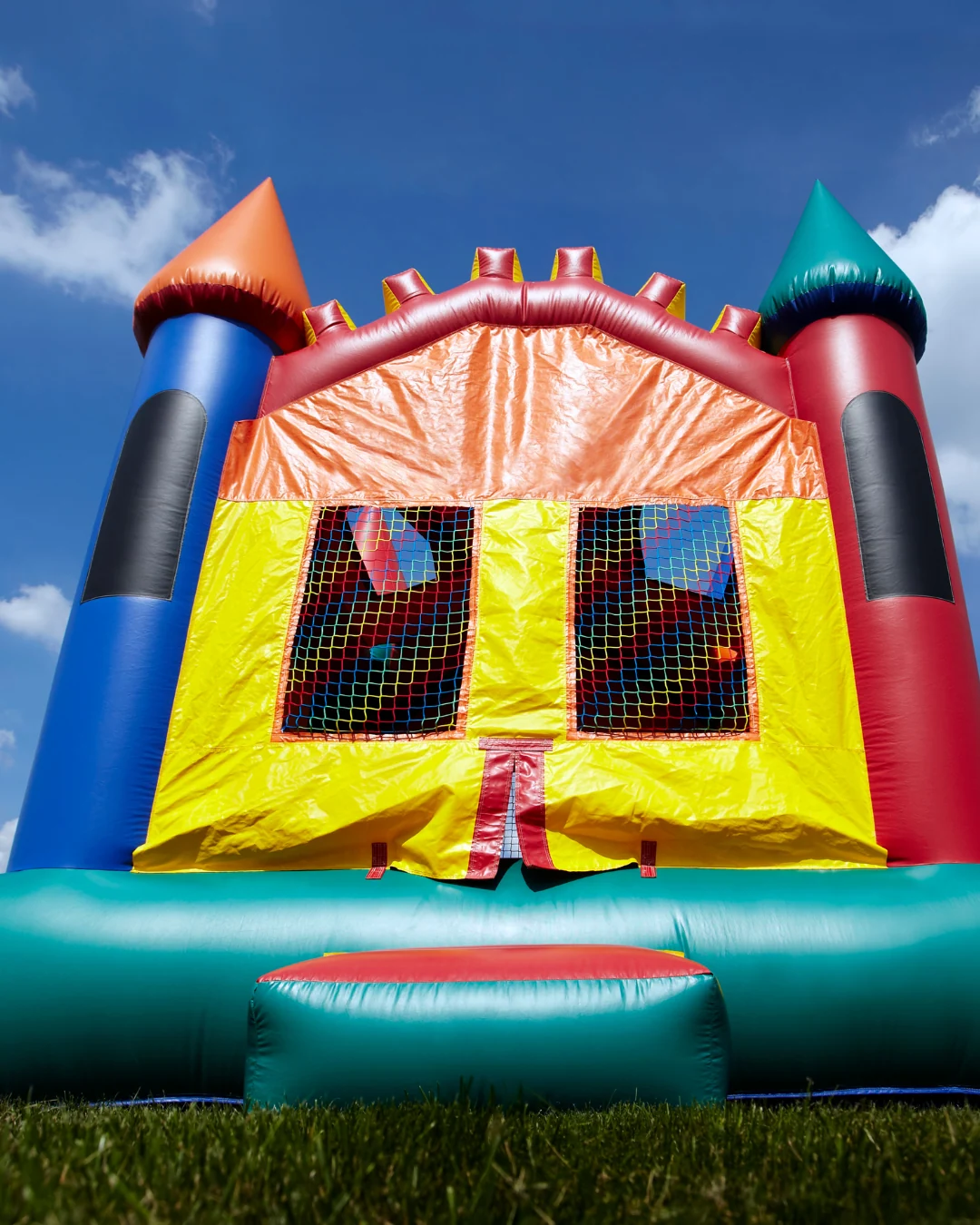
Obviously, a running shoe isn’t that unstable, but the principle is the same on a smaller scale. Many running shoes have soft, cushioned soles designed to absorb force when you’re running. That cushioning is exactly what you don’t want when you pick up a barbell, which is why those shoes usually aren’t my first choice for lifting.
Here are some options that provide a firmer base:
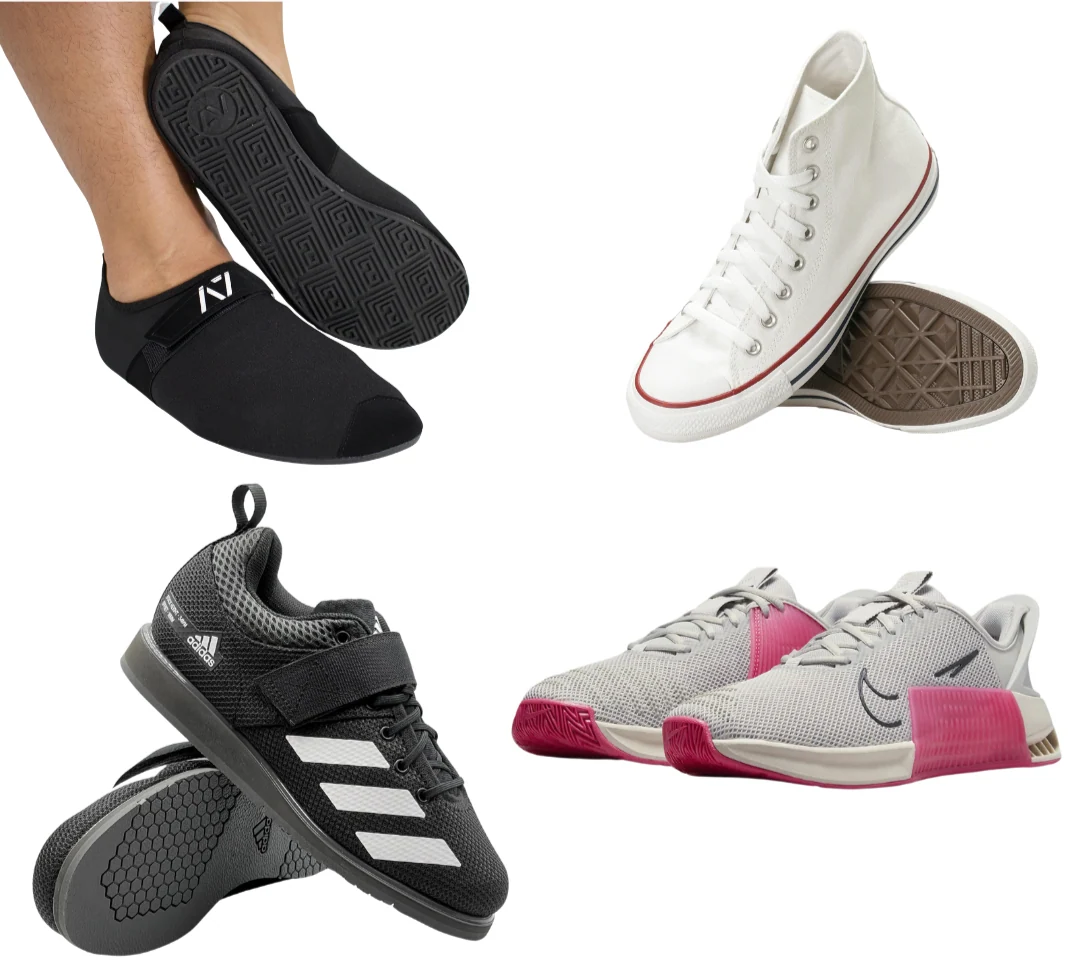
- Socks or deadlift slippers, if your gym allows them.
- Vans, Chucks or other stiff-soled street shoes.
- CrossFit-style shoes, such as Nike Metcons or Reebok Nanos.
- Purpose-made lifting shoes, such as Nike Romaleos, Adidas Powerlift or Notorious Lift shoes.
Flat shoes vs heeled lifting shoes: which should you choose?
A heeled lifting shoe raises the back of your foot above the front, effectively giving you some extra, artificial ankle range of motion. You can move your knees further forward over your toes without needing as much ankle dorsiflexion.
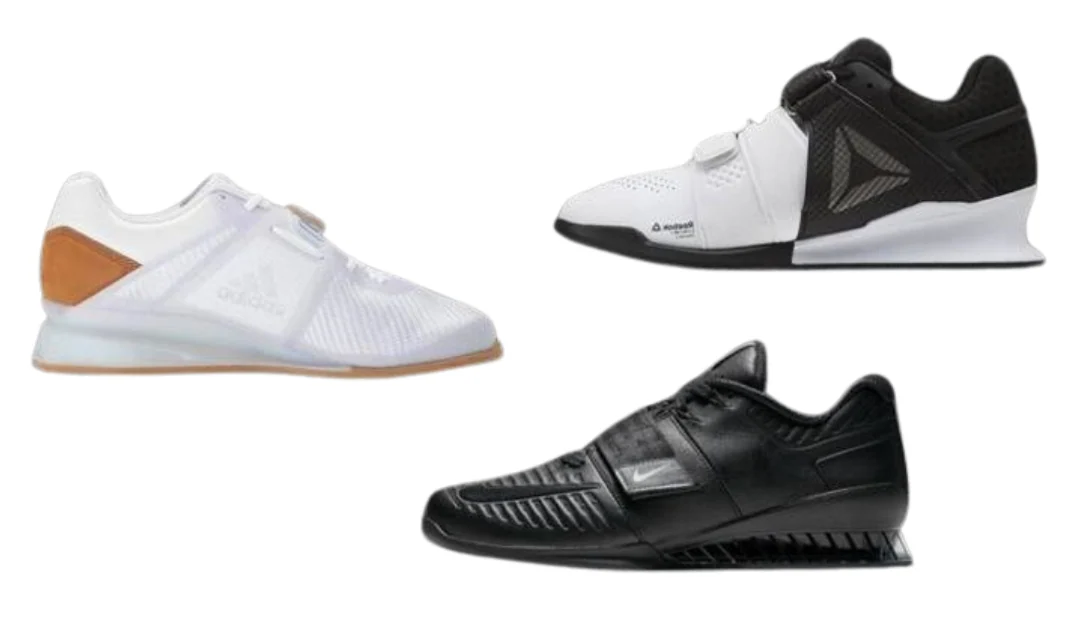
That’s useful for some lifts. For others, a raised heel can actually make things harder.
Are heeled lifting shoes better for squats?
This matters most for squats, lunges, cleans, snatches and similar movements.
Some people (I am some people) don’t have the ankle mobility to do this comfortably without lifting their heels. This can be especially relevant if you have proportionally longer femurs or less mobile hips, because of the positions you need to get into to squat comfortably.
For those lifters, squat shoes with a raised heel can make a noticeable difference. But that doesn’t mean everyone should squat in them. Some people are perfectly comfortable in flat shoes.
Not sure whether heels will help your squat? Try borrowing a pair of lifting shoes or doing a few squats with your heels on a wedge or small plates. If the position feels stronger and more comfortable, then perhaps it’s worth investing in some heeled shoes. If it makes no noticeable difference, you probably don’t need them.
Should you wear heeled shoes for bench press?
There isn’t an inherent performance benefit to wearing heels for bench press in the same way there can be for a squat. But your shoes can affect your setup and, if you compete, whether you satisfy the rules.
At a powerlifting competition, one of my athletes had his first bench attempt disqualified because the referee called his heels for coming off the floor. They were moving slightly, but the back of his shoes also tapered upwards, making that movement look much more pronounced.
I got him to switch to my squat shoes for his next attempt, and there were no more issues for his final two benches.
If you compete in a federation that requires your heels to stay down, heeled shoes can sometimes help, particularly if you’re shorter and have trouble reaching the floor comfortably from the bench.
What shoes are best for deadlifts?
I know some people who prefer deadlifting in heels, but for most lifters, a flat shoe with a thin sole is the better option.
Elevating your heel increases the distance you need to reach down to the bar. It’s a little like turning your deadlift into a deficit deadlift, and for most people, that makes it harder to lift as much weight.
A raised heel can also encourage you to tip further forward over the bar, which may make your starting position less efficient.
That’s why deadlift slippers, socks (where allowed) and thin, flat shoes are so popular.
What about shoes for other gym exercises?
For most other movements, it matters much less exactly which shoe you’re wearing. As long as it’s comfortable and provides a firm base of support, you’re probably fine.
A flat sole or a very slight heel (around 3 mm) can be comfortable for walking around and doing general gym work. You don’t need a different pair of shoes for every row, press or machine exercise.
How much does sole thickness matter?
This is another activity-specific detail, and it matters most when you have to pick a weight up from the floor, such as with deadlifts, stones and some other strongman lifts.
Just like a raised heel, a thick sole makes you start further away from the bar. Doing a deadlift in a pair of 1960s-style platform shoes would make the lift considerably more difficult!
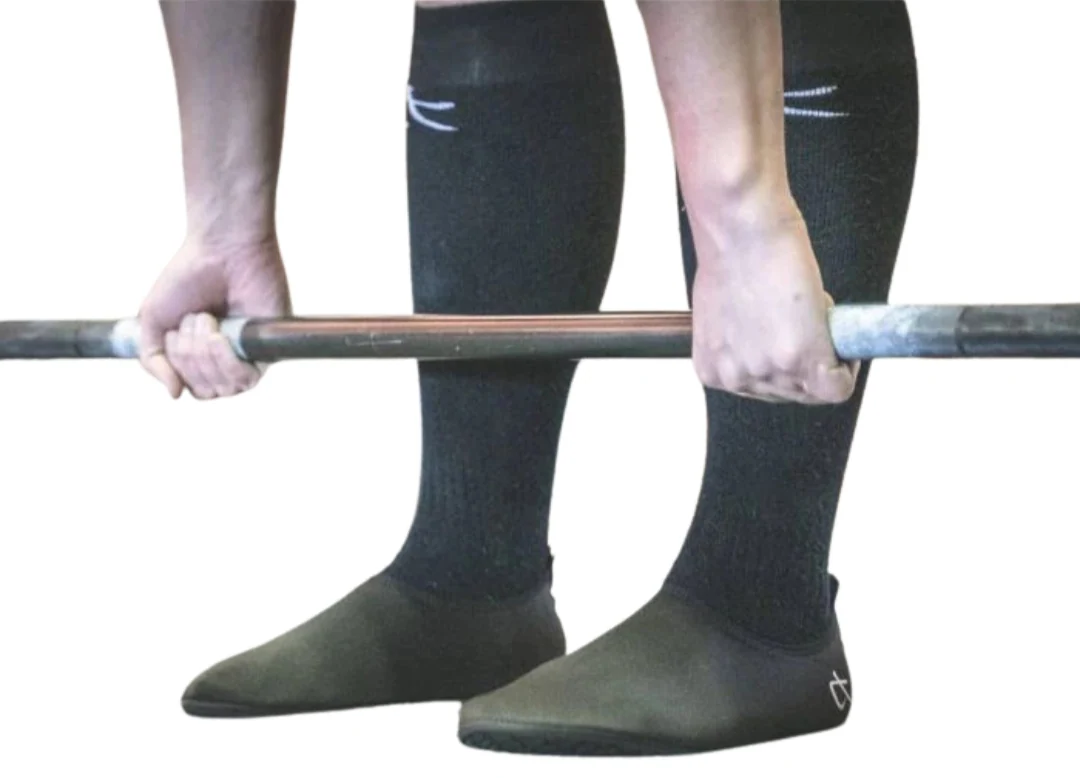
The thickness of the sole can also affect the weight of the shoe. For activities such as muscle-ups or front levers, carrying a few extra hundred grams on the end of each leg may make a meaningful difference to your performance.
So how should I choose my shoes for the gym?
If the shoes mentioned above work for your training, you don’t need anything more specialised. If you’re serious about powerlifting, weightlifting, strongman or another strength sport, you may eventually want different shoes for different lifts, such as squat shoes for squatting and deadlift slippers for pulling.
Fit matters as well. Trying shoes on in a shop gives you some idea of whether they’re comfortable, but they might feel quite different when you’re standing under a couple of hundred kilos. If you can, make friends with someone who has a similar shoe size and borrow their shoes for a few working sets. That’s much more useful than walking around the shop for five minutes.
One last tip: many lifting shoes come in men’s and women’s versions. Sometimes the difference is mainly the colour, but sometimes the men’s version is wider or fits differently. It’s worth trying both rather than assuming the men’s or women’s version will fit you best.
What if changing your shoes doesn’t fix the lift?
The right shoes can give you a more stable base or help you reach a better position. They’re worth getting right, but they won’t solve every technique or strength problem.
If you’ve tried a different heel height and your squat still doesn’t feel right, or you’re unsure why one of your lifts is proving difficult, it’s worth looking at how you’re performing the movement and how you’re training it.
That’s something I work through with the people I coach. I review training videos alongside your program and training history, so we can figure out whether it’s your setup, your technique or something in your program that needs adjusting.